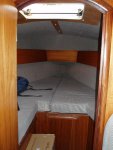
Painting interior fiberglass- What to use?

louisderry

Well-Known Member
Joined
16 Oct 2012
Messages
146
Visit site
Hi all, I'm soon to be moving aboard my Jaguar 27 so there's lots of work to be done!
On one of the births located directly under the deck lockers the roof and walls are moldy due to a leak that I have now fixed.
I've now cleaned the roof and side of the interior of the berth exposing what seems to be fiberglass with a thin gel-coat layer.
Can anyone recommend an interior gel-coat to seal it all up and stop damp collecting in the future ?
I realise the area has to be keyd with sandpaper using a mask but if someone could recommend a good gelcoat for this that'd be ace. :D
 
...seems to be fiberglass with a thin gel-coat layer.
Can anyone recommend an interior gel-coat to seal it all up and stop damp collecting in the future ?
I realise the area has to be keyd with sandpaper using a mask but if someone could recommend a good gelcoat for this that'd be ace. :D

Are you sure it's gelcoat? If it's not a moulded finish, it almost certainly won't be: probably flow-coat, which is somewhere between ordinary resin and gelcoat and is sprayed or painted on.
It's not clear what you're trying to achieve. If the GRP is left exposed in a humid environment, it will attract condensation whatever is painted on it. If it has an irregular surface and you simply wish to make it easier to wipe dry/clean, then more flow-coat may help.
 
I would guess the alternatives would be polyester Flo coat (top coat), two pack polyeurathane, or single pack acrylic.
On balance I would go with two pack polyeurathane simply because it offers the best balance between ease of application and hardness of finish. If you want to do something about condensation consider foam backed vinyl. A bitch to fit but worth the effort.
 
Okay I'm not 100% it's gel coat - i'm still learning so I'll try give some more details. It's white and still has the texture of raw fibreglass that sort of chipboard look. You can see it's been painted over the fireglass. Oh and mold scrubs of it with a nylon brush fairly easy.


What I'm trying to achieve - Improve the aesthetic and prevent a mold build up in the future? It doesn't have to be a completely smooth service when I'm finished but at the moment it's looking a bit shabby color wise.

I'll look up flow-coat and foam backed vinyl and see if they're an option perhaps.
 
Okay I'm not 100% it's gel coat - i'm still learning so I'll try give some more details. It's white and still has the texture of raw fibreglass that sort of chipboard look. You can see it's been painted over the fireglass. Oh and mold scrubs of it with a nylon brush fairly easy.

Then it's almost certainly flow-coat or even ordinary polyester resin (plus white pigment). If you wish to make it smoother still, I'd use more flow-coat rather than paint (primarily so as not to introduce another compound, less you should wish to tart it up some more in the future). By filling, fairing and coating it would be possible to make the finish completely smooth, although at the cost of a fair bit of effort: maybe something you'd want to do down the line.

And don't ignore the need for ventilation: often the simplest means of reducing condensation.
 
Then it's almost certainly flow-coat or even ordinary polyester resin (plus white pigment). If you wish to make it smoother still, I'd use more flow-coat rather than paint (primarily so as not to introduce another compound, less you should wish to tart it up some more in the future). By filling, fairing and coating it would be possible to make the finish completely smooth, although at the cost of a fair bit of effort: maybe something you'd want to do down the line.

And don't ignore the need for ventilation: often the simplest means of reducing condensation.

Okay some good advice there cheers-
So just to clear it up if there's a high chance it's flow-coat- and I'm wanting to add a new layer- would I just do a key and acetone and then apply like normal?
Just to improve the color and protection as appose to smoothness.
 
Okay some good advice there cheers-
So just to clear it up if there's a high chance it's flow-coat- and I'm wanting to add a new layer- would I just do a key and acetone and then apply like normal?
Just to improve the color and protection as appose to smoothness.

Once you flow coat you will have to virtually sand it off if you want to re coat. The wax in the Flowcoat will reject pretty much anything you want to re coat with.
 
So just to clear it up if there's a high chance it's flow-coat- and I'm wanting to add a new layer- would I just do a key and acetone and then apply like normal?

Abrasive key, then a thorough going over with a scrubbing brush and soapy water, rinse and allow to dry thoroughly. Acetone shouldn't be needed unless there are stubborn oily residues. The wax in new flow coat, which migrates to the surface during curing, can be removed by similar means.
 
Clean it with sugar soap and paint it with bathroom paint as jacaldo says. I did my old boats forepeak that way five years ago and it is still clean and fresh.
 
Hi Louis,
I don't think flowcoat is what you need. You can get bilge paint or locker paint which would be suitable but there are other more economical options as others mention, that will be fine. One way that we tart up bare fibreglass (often after removal of foam backed vinyl coverings that have deteriorated) is by gluing inexpensive carpet to it. Example in the photo below where I did it in a forecabin on a previous boat. If you did choose to go down this road the usual thing to use would be spray contact adhesive which requires very good ventilation & an appropriate mask. I once saw a boat where the owner had wallpapered the quarter berth which was bizarre but there you go...

18.jpg
 
If you are going to live on the boat (or even if you're not) you need to kill the condensation. I've found the best way is glue on foil-backed bubble wrap then cover that with floor carpet(again glued on). I have lived on board for 11years , both in Scotland and here on the Algarve and it's worked for me.
 
If you are going to live on the boat (or even if you're not) you need to kill the condensation. I've found the best way is glue on foil-backed bubble wrap then cover that with floor carpet(again glued on). I have lived on board for 11years , both in Scotland and here on the Algarve and it's worked for me.
Sounds like a clever idea, but doesn't the bubble-wrap break down?
 
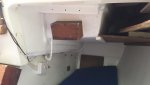
hi all I'd like to thank you all for your responses - just an update in the end I went with bilge locker paint - I keyed the entire area and gave more attention to the sections flaking from water damage , it's worked well and seems tough as he'll, now well ventilated and leaks have been fixed. just some cable tidying to do.20150330_135902.jpg
 
Last edited:
I had this problem with my first sea boat. Although a pain, I bonded thin battens 14 x 14 onto the surface and then made up vinyl covered panels and screwed these on. Gave a very professional look, added insulation and therefore eliminated condensation and it was easy to keep clean.

Max.
 
Top